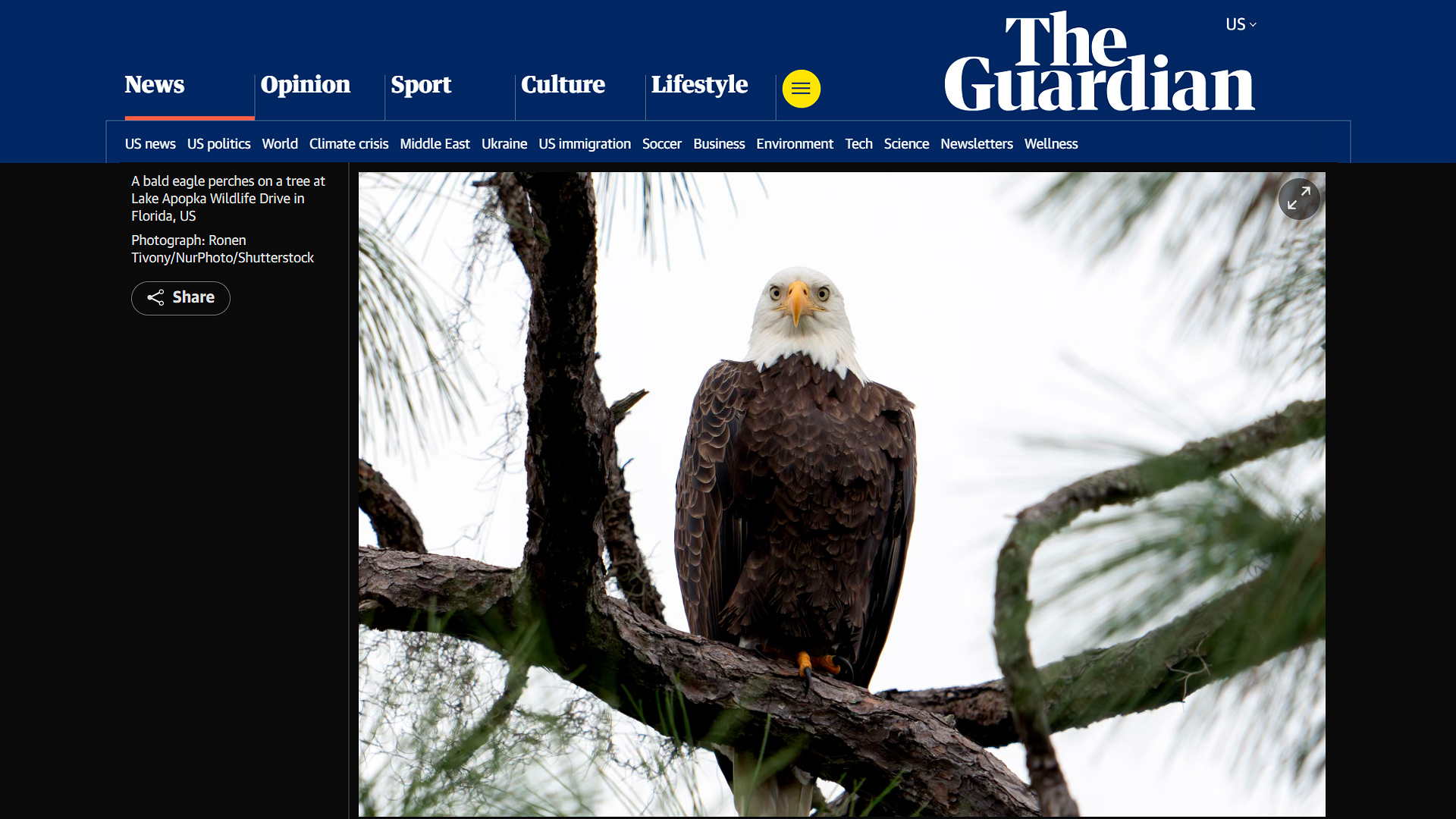
A bald eagle perches on a tree at Lake Apopka Wildlife Drive in Florida. Photo: Ronen Tivony
My phot of a Bald Eagle captured in Lake Apopka Wildlife Drive was featured in The Guardian’s, The Best of This Week’s Wildlife Photographs from Around the World (Oct 17, 2025)
Bald Eagles are among North America’s most iconic birds of prey. They can reach wingspans of up to seven and a half feet and dive at speeds over 100 miles per hour when hunting. Though they appear powerful and aggressive, they primarily feed on fish and are skilled at stealing catches from other birds. After nearly disappearing due to hunting and pesticide use in the mid-20th century, conservation efforts brought the species back from the brink, a major success story for wildlife protection in the United States.
Lake Apopka Wildlife Drive
Many of my eagle photographs, including this one, were taken at Lake Apopka Wildlife Drive, one of Central Florida’s best birding and photography locations. The 11-mile drive winds through restored wetlands that attract hundreds of bird species, alligators, otters, and other wildlife.
During the winter months, Lake Apopka becomes a hotspot for migrating raptors and waterfowl. Bald Eagles can often be seen perched on snags, soaring above the marsh, or diving for fish in the open water. For photographers, the drive offers countless opportunities to observe and capture Florida’s wildlife up close.
About Ronen Tivony
Ronen Tivony is a wildlife photojournalist based in Florida, specializing in capturing authentic moments of wildlife behavior and the connection between animals and their environments. His work has been published in leading outlets including The Guardian, The New York Times, National Geographics, CNN, BBC and other international media.
When not on assignment, Ronen leads wildlife photography workshops and tours across Florida, sharing his expertise and passion for photographing the state’s remarkable birdlife and ecosystems. His goal is to inspire others to experience nature with respect, patience, and curiosity and to help preserve the wild places that make these encounters possible.