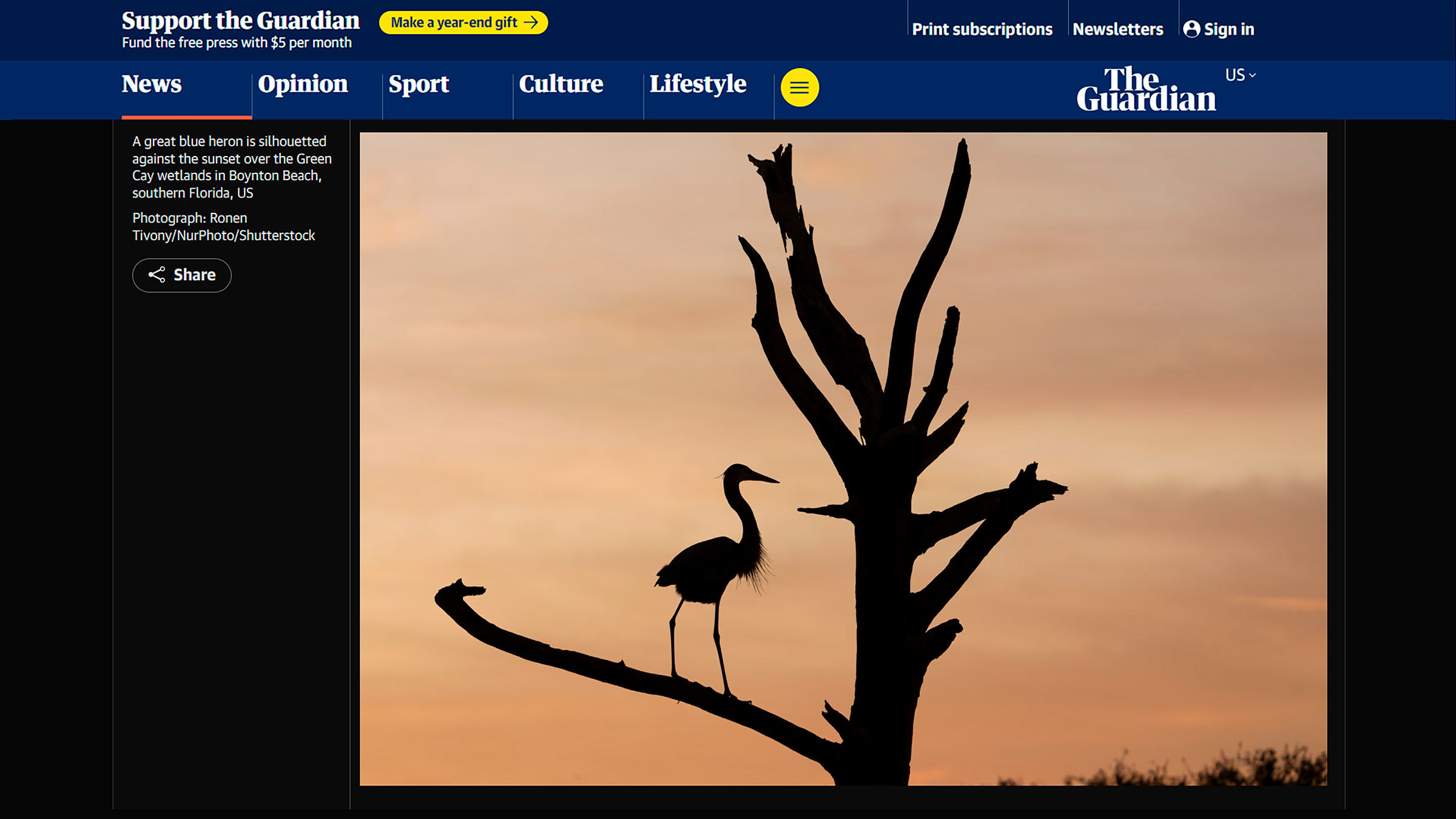
A great blue heron is silhouetted against the sunset over the Green Cay wetlands in Boynton Beach, southern Florida.
Photo: Ronen Tivony
I’m honored that my photo of a Great Blue Heron at Green Cay Wetlands in Boynton Beach, Florida, was selected for The Guardian’s “Week in Wildlife” feature this week (December 19, 2025). The image shows a lone Great Blue Heron, silhouetted against the fiery colors of a South Florida sunset.
About the Great Blue Heron
The Great Blue Heron (Ardea herodias) is one of North America’s most iconic wading birds. Standing up to 4.5 feet tall with a wingspan of 6 feet, it’s hard to miss once you know what to look for.
Habitat: Found in marshes, swamps, rivers, lakes, and coastal areas across North and Central America. In Florida, they’re common year-round in both freshwater and brackish wetlands.
Feeding behavior: Patient hunters. They stand motionless or walk slowly through shallow water, then strike with lightning speed when a fish, frog, or small reptile comes within range. Their long necks and dagger-like bills make them incredibly efficient predators.
Flight: In flight, they retract their neck into an S-shape and trail their long legs behind. Their slow, deep wingbeats are unmistakable.
Nesting: Often nest in colonies called “rookeries,” usually in trees or mangroves near water. In Florida, breeding season typically runs from late winter into spring.
Green Cay Nature Center & Wetlands
Green Cay Wetlands is a 100-acre nature preserve in Boynton Beach, managed by Palm Beach County. It’s built on a former stormwater treatment area, now transformed into a thriving freshwater wetland that attracts an incredible variety of birds and wildlife.
Location: 12000 Hagen Ranch Road, Boynton Beach, FL 33437
Habitat: Boardwalks wind through cattail marshes, open water, and tree islands, offering easy access for photographers and birders of all levels.
Wildlife highlights:
Wading birds: Great Blue Herons, Great Egrets, Snowy Egrets, Little Blue Herons, Tricolored Herons, White Ibis, Roseate Spoonbills
Raptors: Osprey, Red-shouldered Hawks, and sometimes Snail Kites
Mammals: River otters, raccoons, and the occasional bobcat
Reptiles: American alligators, turtles, and various snakes
Photography tips:
Sunrise and sunset are golden hours here, especially when the sun is low over the water.
Use the boardwalks to get close to birds without disturbing them.
A telephoto lens (200–600 mm) works best.
Green Cay is a fantastic spot for both beginners and experienced photographers, and it’s a regular stop on my South Florida photo tours.
Florida Photography Workshops & Tours
If you’ve ever wanted to photograph Great Blue Herons, egrets, spoonbills, and other Florida wildlife in their natural habitat, I lead small-group photo workshops and private tours across the state.
Locations: Everglades National Park, Corkscrew Swamp, Wakodahatchee Wetlands, Green Cay, Loxahatchee, Fort De Soto, Merritt Island, and more.
Tour types:
Half-day and full-day photo walks
Multi-day photo safaris (including lodging options)
Private one-on-one coaching
Whether you’re new to wildlife photography or looking to refine your skills, these tours are designed to help you come home with powerful, publishable images.
About Ronen Tivony
I’m a wildlife photojournalist and certified Florida Master Naturalist with decades of experience in photojournalism. My images have been published in major publications such as National Geographic, BBC, CNN, The Guardian, The New York Times, and The Atlantic.
I run Wildlife With Ronen, offering photography workshops and tours that combine fieldcraft, natural history, and storytelling. My goal is simple: to help photographers of all levels see the wild world more deeply.
If you enjoyed this post, you can explore my full portfolio of published wildlife photography or check out my upcoming Florida photography workshops to improve your own field craft.