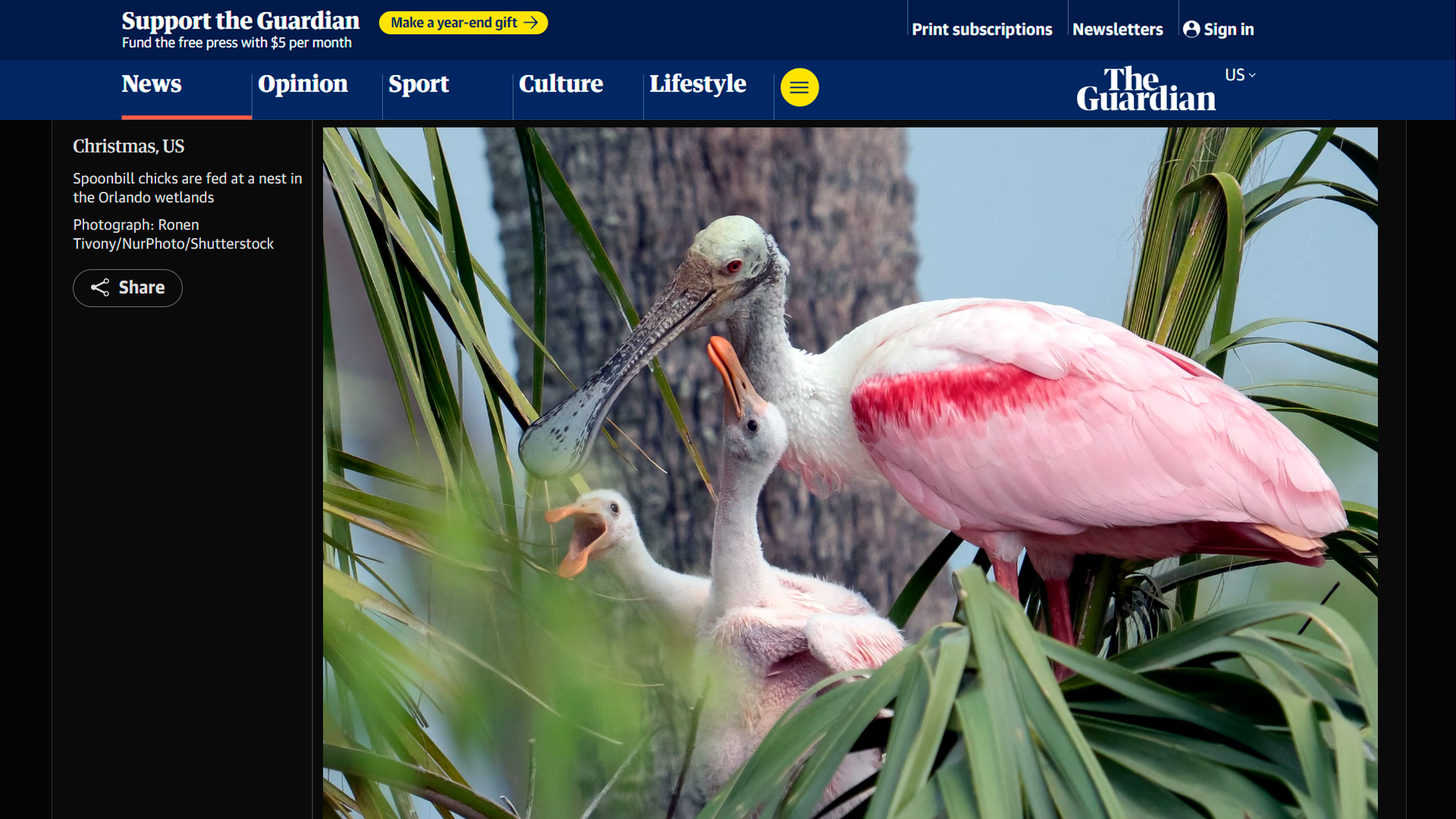
Roseate spoonbill photography in Florida is such a joy and fantastic photo opportunity — and this week, it led to a milestone I’m proud to share. My photograph of a roseate spoonbill chick with its parents was taken at a rookery in St. Augustine, Florida. It was selected for The Guardian’s “Week in Wildlife” gallery on April 24, 2026.
The published caption read:
“A roseate spoonbill chick with its parents in a rookery in St Augustine, Florida – Photo: Ronen Tivony”
Why Florida Is the Best Place for Roseate Spoonbill Photography
Florida is, without question, the premier destination for roseate spoonbill photography in North America. The state’s vast network of coastal wetlands, mangrove estuaries, and shallow tidal flats provides ideal habitat. Florida’s established wildlife refuges and rookeries also give photographers legal, ethical access. That kind of access simply doesn’t exist in most other parts of the species’ range.
Roseate spoonbills (Platalea ajaja) are year-round residents in southern Florida. They are also seasonal nesters across much of the peninsula and into the northeast.
The best locations for roseate spoonbill photography in Florida include:
- St. Augustine: mixed-species rookeries with reliable nesting spoonbills, highly accessible
- Orlando Wetlands Park, Christmas: a hidden gem with excellent year-round spoonbill activity
- Stick Marsh, Fellsmere: a top destination for wading bird photography, with spoonbills regularly foraging in the shallows
- Everglades National Park: remote wilderness photography for the more adventurous
- Tampa Bay: one of the largest spoonbill populations in the state
No Florida wildlife photography portfolio is complete without roseate spoonbills, and once you’ve photographed them in the right light, you’ll understand why.
The Guardian Image: A Spoonbill Family at the St. Augustine Rookery
The photograph published in The Guardian was made during spring nesting season. The location was a colonial waterbird rookery in St. Augustine. Rookeries are dense nesting colonies where multiple wading bird species gather to breed. They are the heart of roseate spoonbill photography in Florida. St. Augustine’s rookeries host great blue herons, snowy egrets, tricolored herons, white ibis, and roseate spoonbills, all nesting within feet of one another.
This particular image shows a downy spoonbill chick nestled between both parents. The adults’ vivid rose-pink plumage is the product of carotenoid pigments from years of feeding on crustaceans.
Understanding the Roseate Spoonbill: What Every Florida Photographer Should Know
Great roseate spoonbill photography in Florida begins with understanding your subject. These birds are visually spectacular. Their behavior is equally extraordinary. Knowing what to look for will transform your images.
Plumage and color: The pink and rose-red coloring of adult spoonbills intensifies with age and health. First-year birds are pale, almost white. Mature adults develop deep carmine shoulder patches and brilliant wing linings. Breeding season also brings a flush of brighter color to the bare facial skin, a subtle but meaningful detail worth capturing.
The spoon-shaped bill: The spatula bill is a precision feeding tool. Birds sweep it side to side through shallow water, using touch-sensitive receptors to detect prey by feel. It snaps shut in milliseconds on small fish, shrimp, and aquatic invertebrates. Photographing this feeding behavior — especially in warm backlit water — produces some of the most dynamic spoonbill images possible.
Nesting behavior: Roseate spoonbills are monogamous within a breeding season and highly attentive parents. Both adults incubate the eggs and feed the chicks by regurgitation. Chicks grow rapidly. The downy white stage lasts around six weeks before juveniles begin developing their first pink feathers.
Social dynamics: Rookeries are social environments. Spoonbills interact constantly — with their mates, their chicks, and neighboring birds. Bill-clattering greetings, preening exchanges, and territorial disputes all offer rich photographic opportunities beyond the standard portrait.
About Ronen Tivony
Ronen Tivony is an award-winning wildlife photojournalist, Certified Florida Master Naturalist, and Fellow of the Royal Photographic Society (FRPS). His work is regularly published in leading global outlets including The New York Times, The Guardian, The Week, CNN, BBC, The Atlantic, and many more.
He leads specialized wildlife photography workshops and tours throughout Florida’s most productive ecosystems, bringing decades of photojournalism experience to wildlife photography instruction.
